Onboarding Experience Redesign
Thirdi
2025
Shipped
Overview
Thirdi is a marketing analytics platform that helps brands visualize, measure, and optimize their campaigns. However, the previous onboarding experience was failing to convert new users — many dropped off before completing sign-up or booking a demo call.
Project snapshot
Role : Lead Product designer
Timeframe: Two weeks
Platform: Desktop
Tools & Plugins : Pen and paper, Figma, Canva, Typescale.
Goal
The goal of this redesign was to make onboarding seamless, clarify Thirdi’s value early, and increase completed sign-ups and demo call bookings — key drivers for conversions.
Problem
Lack of clarity on what Thirdi is or does
The old flow dropped users directly into sign-up or login screens with minimal context. There was no explanation of the platform’s value, purpose, or next steps — users weren’t sure why they were signing up or what would happen next.Abrupt and linear flow
After sign-up, users were taken straight into a dashboard with no guidance. Many didn’t understand that they needed to connect data sources or book a strategy call, causing high drop-offs at the first step.No progressive onboarding
All actions were expected at once — connect accounts, name workspace, explore dashboard — overwhelming first-time users. This led to hesitation and abandonment.No motivation or confirmation of progress
The old experience lacked feedback loops like success states, micro-copy reassurance (“You’re almost there!”), or visual cues that users were progressing toward a goal.
Solution - Redesigning the Onboarding Experience
When I revisited Thirdi’s onboarding, my goal was to transform it from a static form-based entry into a guided and motivating journey.
Here’s how I approached it:
Structured, Modular Flow
I broke the onboarding into three clear phases —
Login & Signup → Data Source Connection → Expert Call Setup.
This modular structure made the experience predictable and easier to follow. Users always knew what step they were on and what was coming next.
Purpose-Driven Storytelling
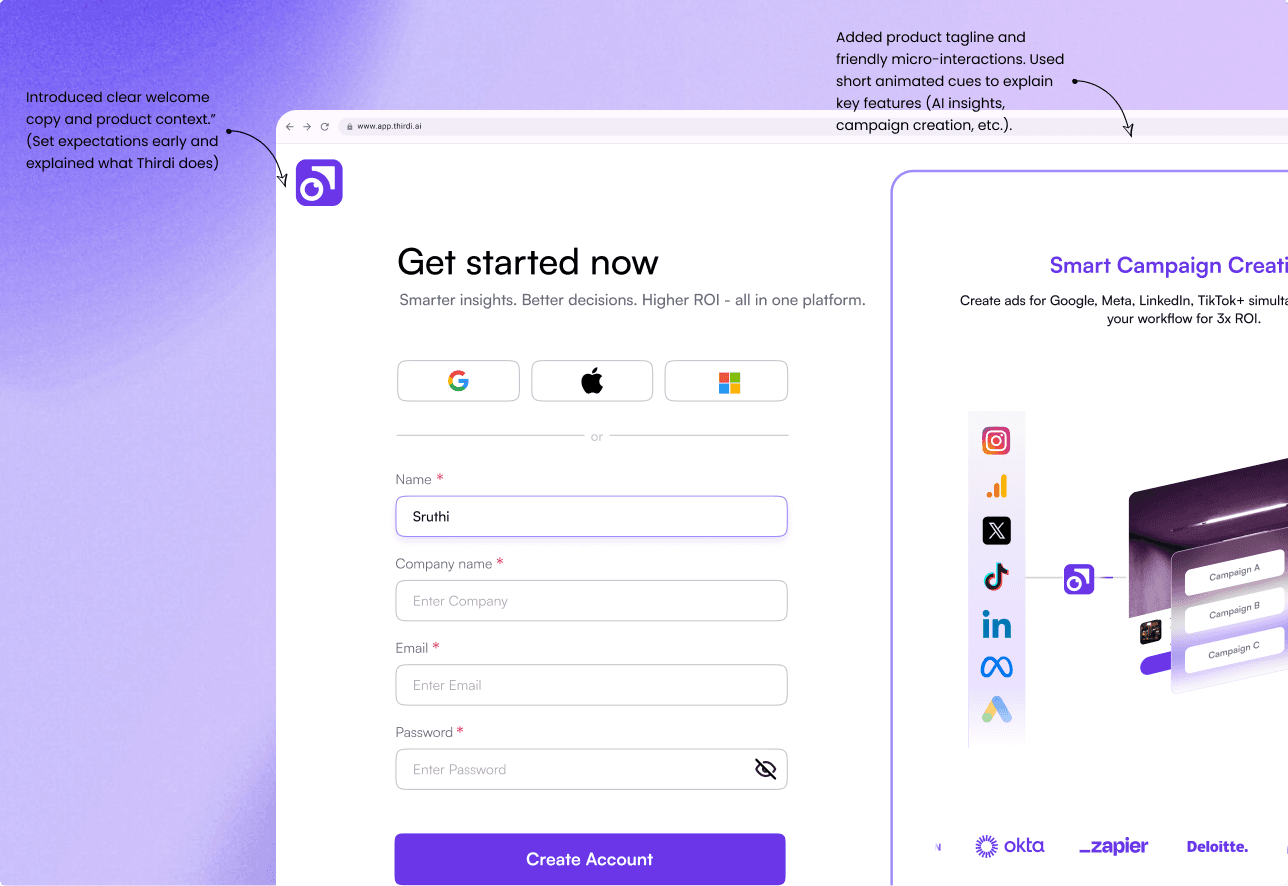
In the old onboarding, users were unsure what Thirdi actually did — they encountered a form before understanding the product’s value. To fix that, I introduced contextual micro-copy and subtle storytelling moments throughout the flow.
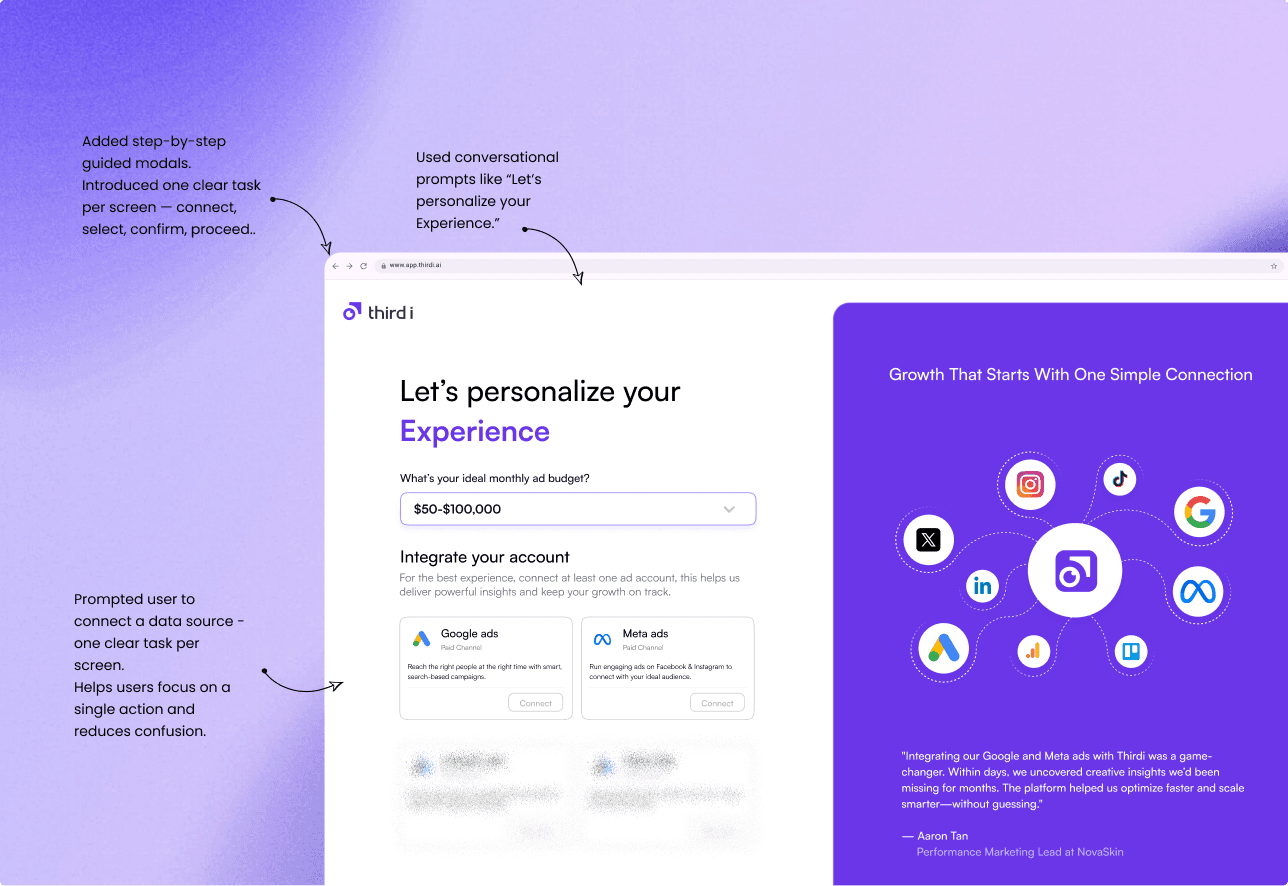
Phrases like “Let’s personalize your experience” and short animated cues about smart campaign creation, AI-led insights, and data-driven recommendations immediately communicate what Thirdi stands for.
Guided Micro-Interactions
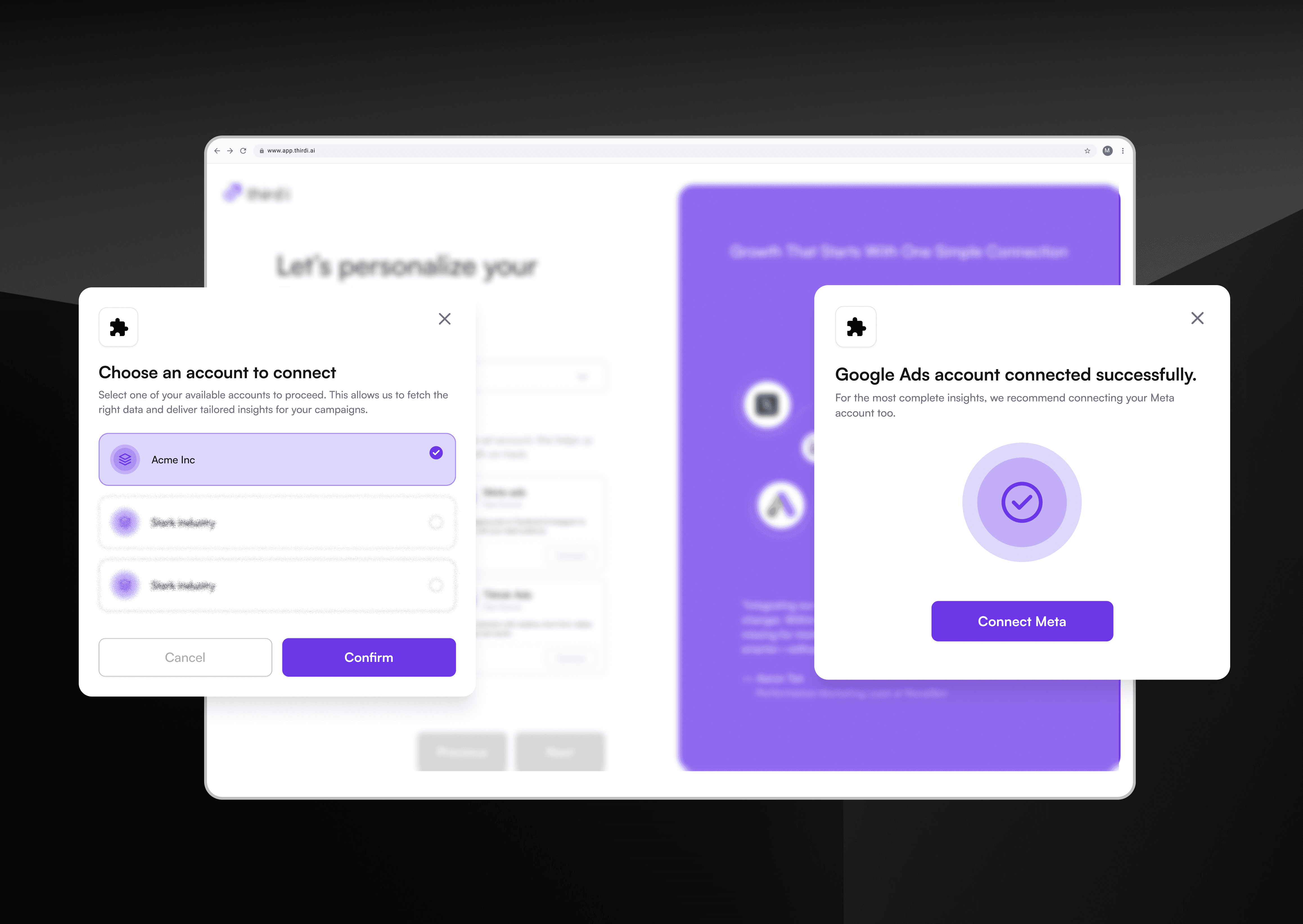
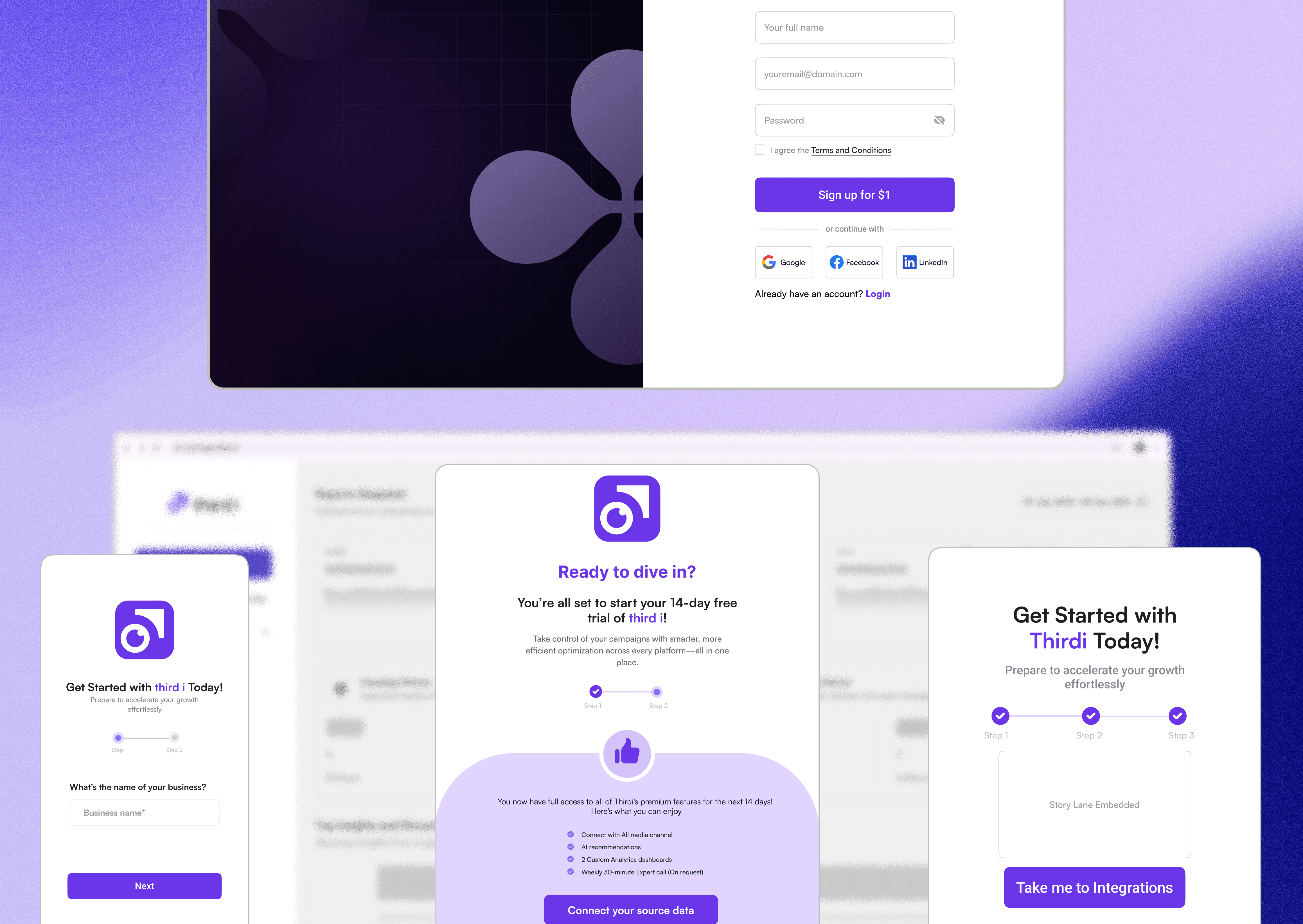
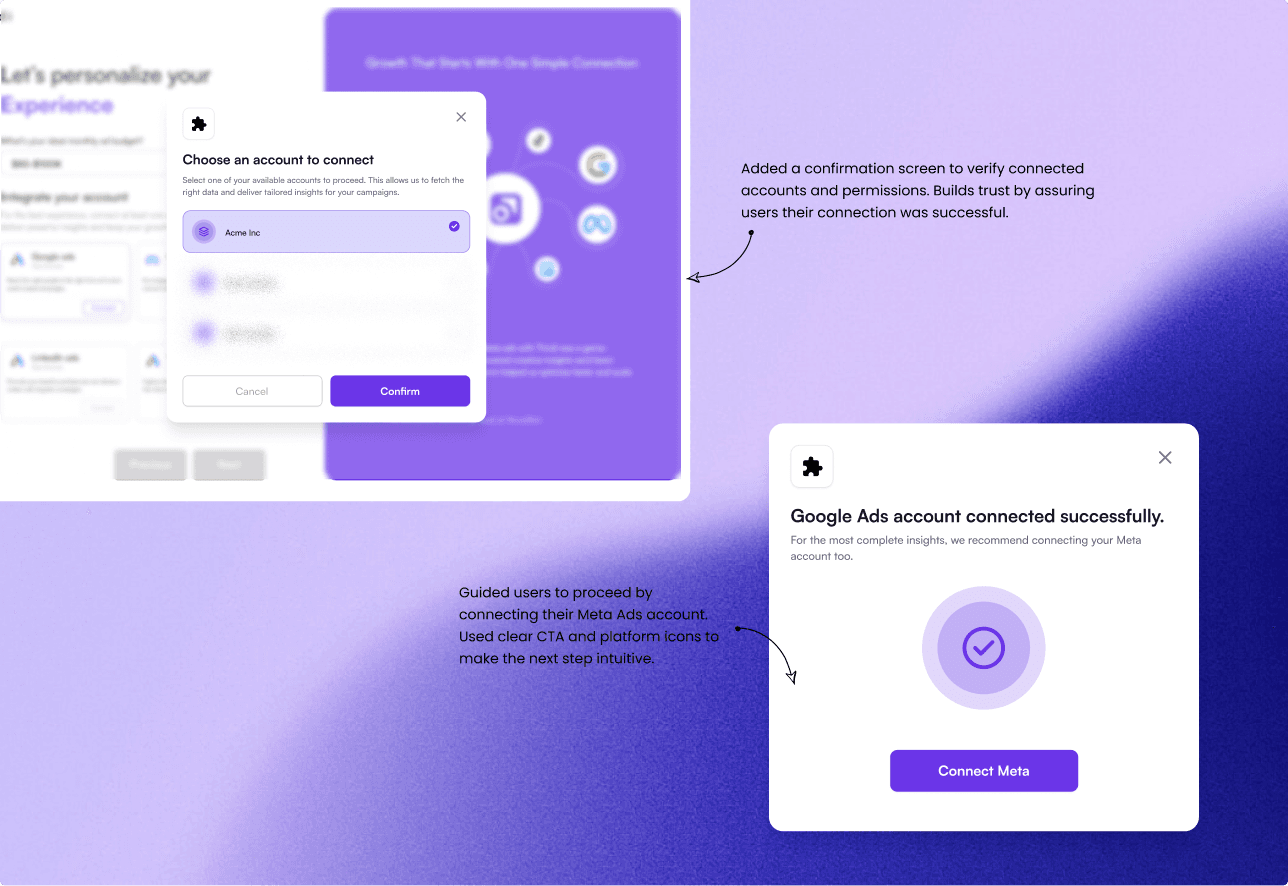
Instead of showing everything at once, I designed progressive modals that appear step by step:
“What’s the name of your business?” → “Connect your source data” → “Take me to integrations.”
This helps users stay focused on one task at a time and makes the flow feel conversational, almost like being guided by a setup assistant.
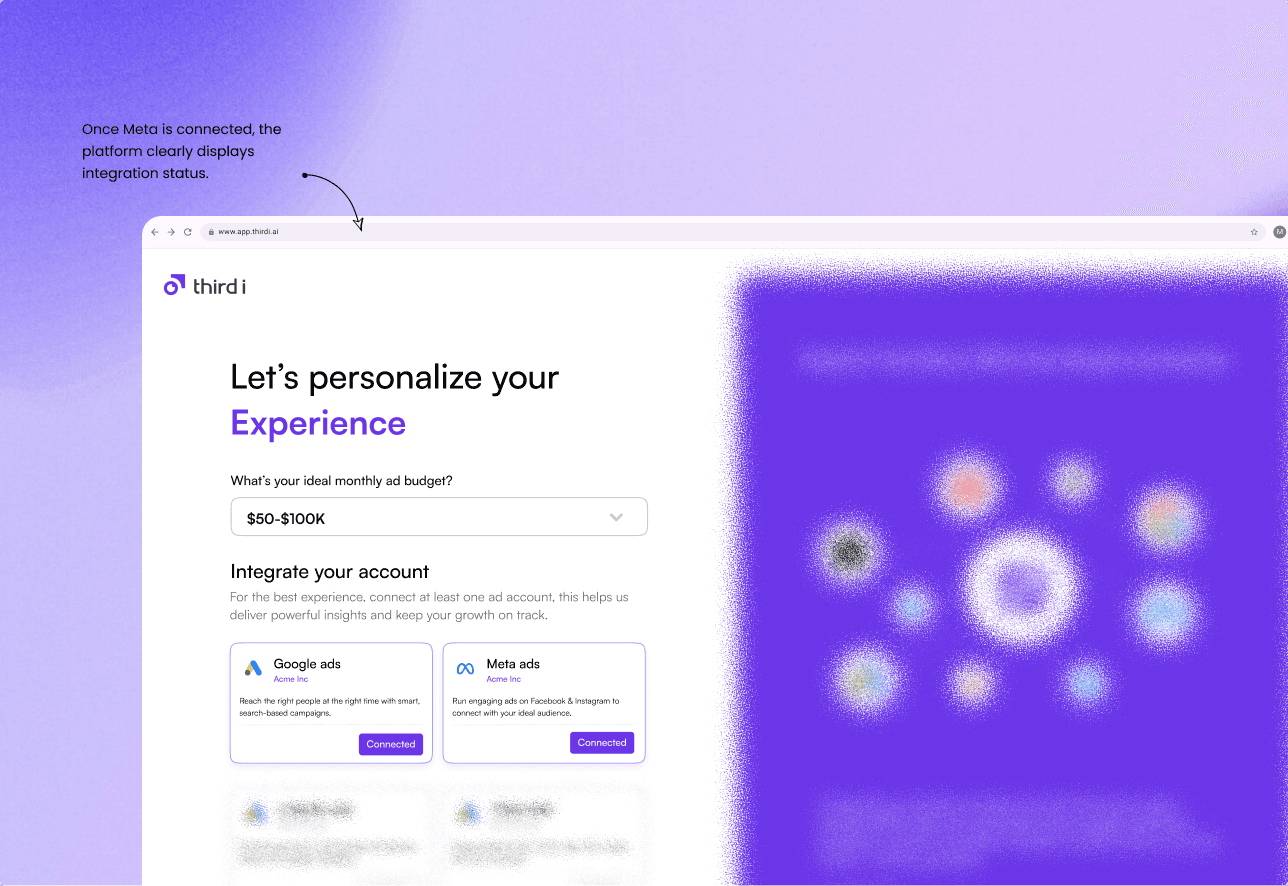
Visual Feedback & Affirmation
Each milestone now gives positive visual feedback — like a thumbs-up icon or a short success message.
These tiny reinforcements help users feel progress and confidence throughout the process, reducing drop-offs caused by uncertainty.
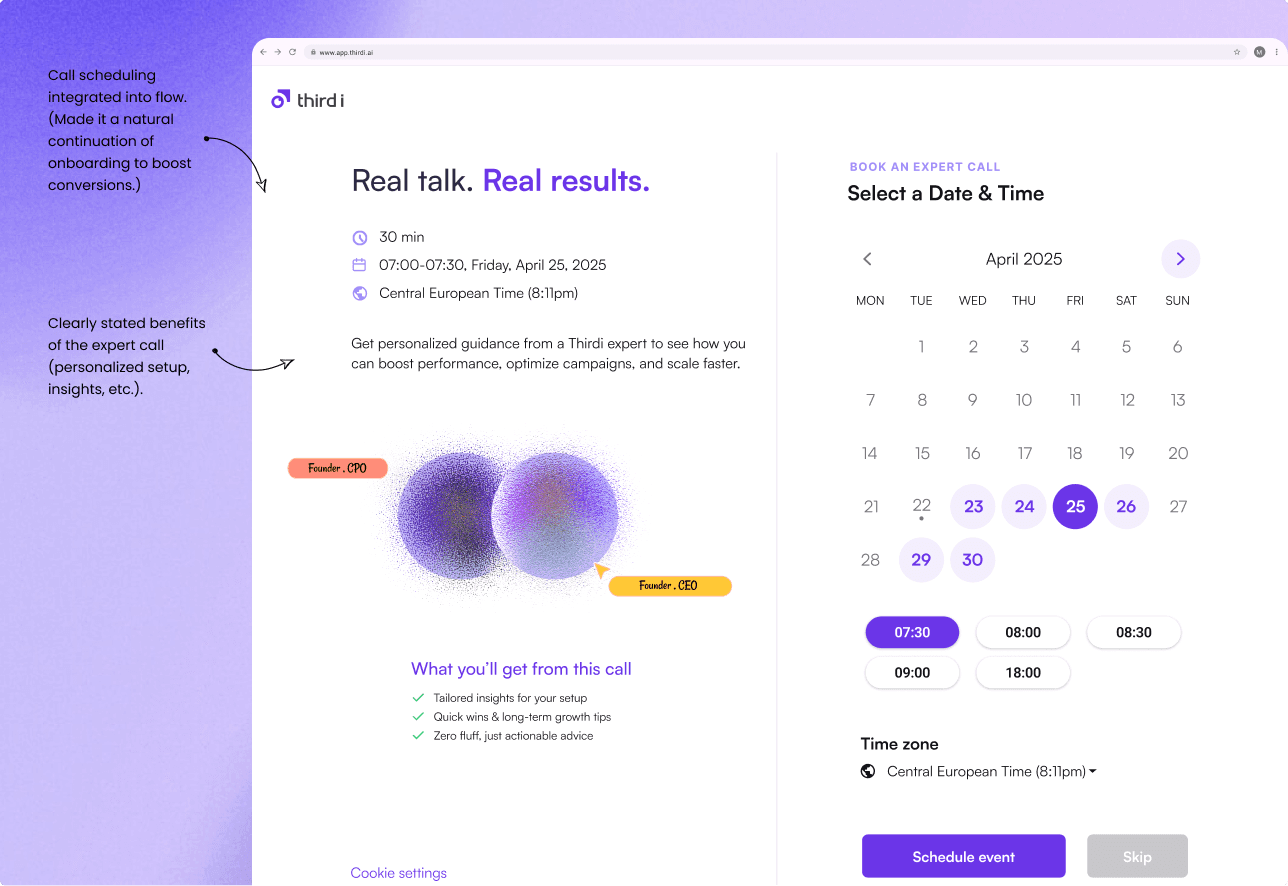
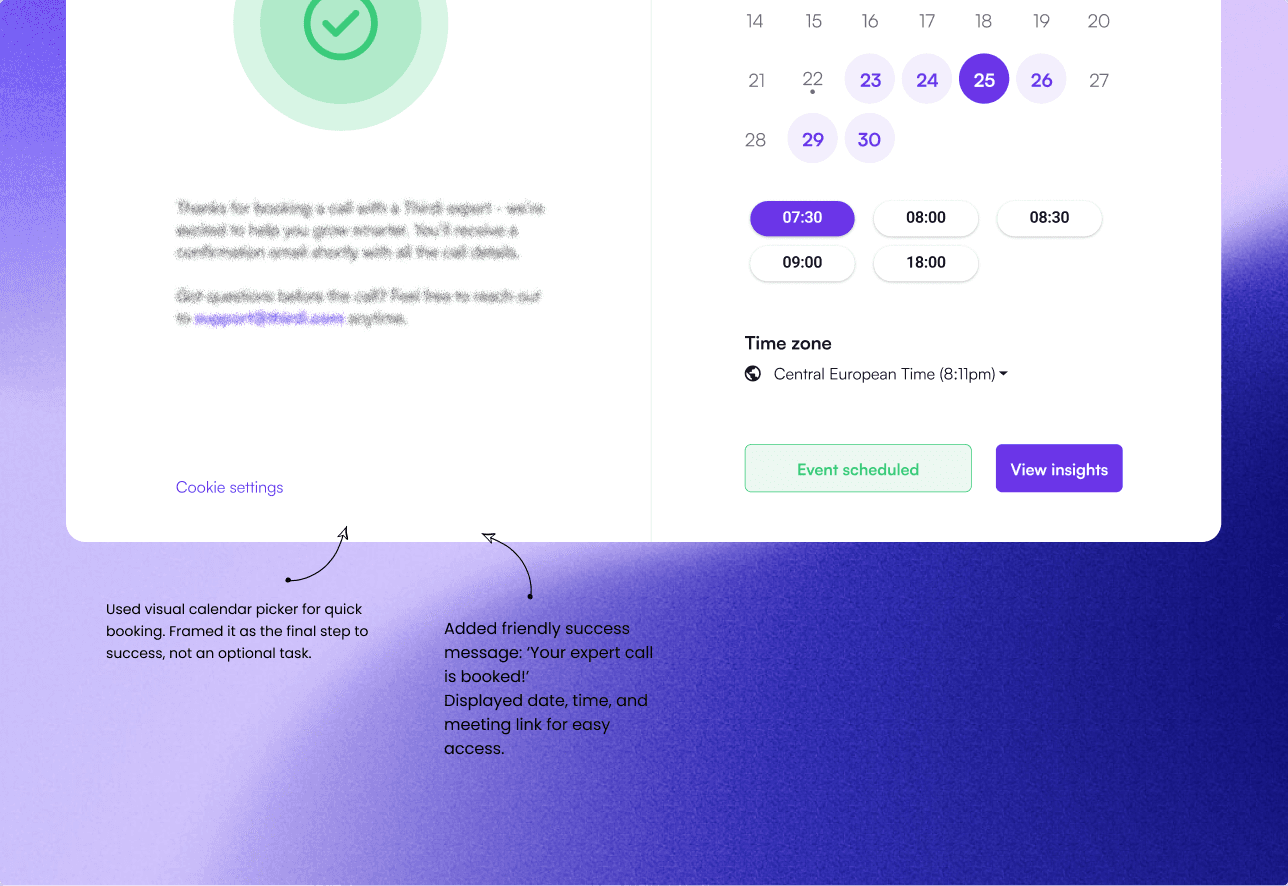
Integrated Call Scheduling
Previously, the “Expert Call” was hidden behind another menu.
Now, it appears as a natural continuation of the onboarding, after users connect their data.
This not only improved flow but also drove measurable increases in completed call bookings — one of the core business goals.
Consistent Visual Language
Finally, I unified the interface using a cohesive purple gradient theme, centralized modals, and simple CTAs like Next → Connect → Schedule.
This visual consistency builds recognition and makes the entire journey feel fluid and cohesive from start to finish.
Before Redesign: The Pain Points
The old onboarding felt confusing and disconnected — users weren’t sure what Thirdi was about.
There was no clear context or introduction, just a plain form asking for details.
No visual hierarchy or flow — too many fields shown at once created friction.
After sign-up, users landed on a blank dashboard with no guidance on what to do next.
The integration step was hidden and not explained, so most users dropped off early.
There was no progress indicator or visual feedback to keep users motivated.
The Expert Call step wasn’t visible, so users missed one of the most important conversion touchpoints.
Overall, the experience felt transactional instead of guided, leading to poor activation.
Onboarding UI with Motion
I added subtle microanimations to the sign-in flow to make it more intuitive and purposeful — visually showing how Thirdi uses AI to turn marketing data into smart insights.
Below are the sign-in UI screens designed for a smooth and intuitive onboarding experience.
Impact (Post-Redesign Insights)
User activation rate: improved from 38 % → 67 % (+29 %)
Call bookings: increased from 21 % → 54 % (+33 %)
User clarity (survey): shifted from “Confusing first step” → “Smooth and clear process”
Average onboarding time: reduced from ~4–5 mins → ~2.5 mins
(Based on projected or early beta-test data)
Reflection
The redesign shifted onboarding from a static, form-based entry point to a guided journey that builds trust and momentum. By clarifying Thirdi’s value and integrating the expert call as part of onboarding, we created a seamless experience that both empowers users and drives business growth.