Bridging the Gap -
A WhatsApp Form Experience
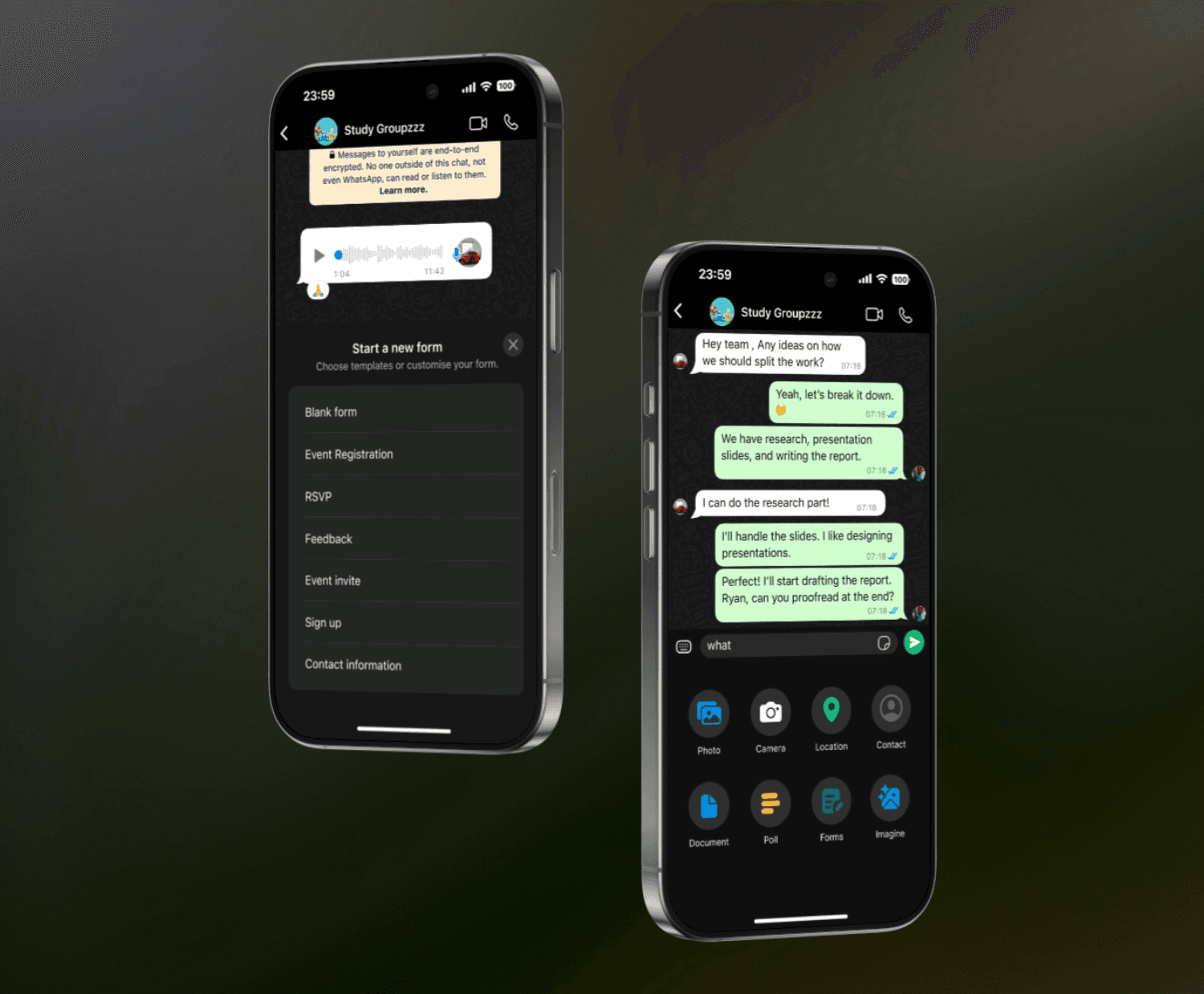
The spark
It started as a tiny gap. But it touched billions of conversations.”
We’ve all been there — planning an event, taking RSVPs, or collecting choices in a WhatsApp group.The moment a chat needs structure, it breaks.Someone drops a Google Form link, context is lost. People forgot, missed it, or simply didn’t bother leaving the app. It seemed like a tiny inconvenience — until you realize that 2.4 billion people face that same friction every day.
That’s when it hit me: why doesn’t WhatsApp have its own way to collect input right inside the chat?
Later, I discovered that WhatsApp Business already offers form-like tools.If structured, conversational forms work so well for businesses — why shouldn’t everyday users have the same experience?
Project snapshot
Role : Lead Product designer
Timeframe: One week
Platform: Desktop
Tools & Plugins : Pen and paper, Figma, Canva, Typescale.
The Problem
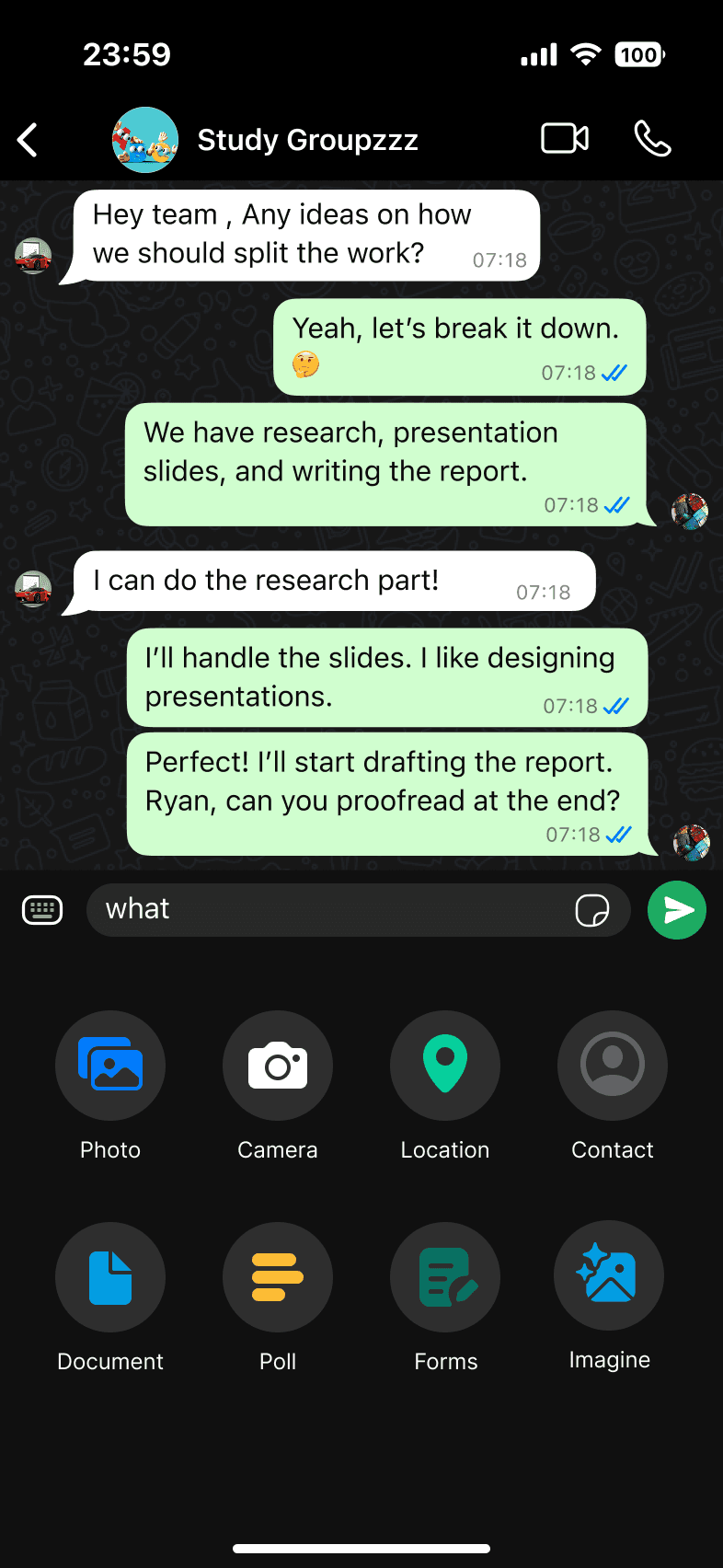
While WhatsApp does offer a basic poll feature, it falls short the moment you need anything beyond a simple yes or no. Ask a question with multiple options, or try collecting feedback, and suddenly you’re forced to jump to Google Forms, Typeform, or WhatsForm. That means leaving WhatsApp, switching contexts, and dealing with new interfaces - all of which break the flow of conversation and lower participation.
Goal
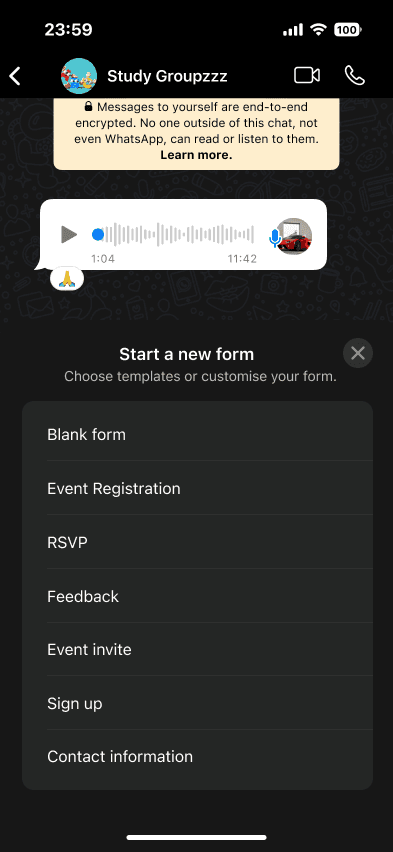
The idea was to help users create forms effortlessly, without breaking flow or switching apps.
Responding should feel just like sending a normal message — fast, familiar, and fluid.
Behind the scenes, users should be able to track and manage responses easily, keeping everything organized within one space.
Most importantly, the design had to feel unmistakably “WhatsApp” — simple, familiar, and trustworthy.
The goal wasn’t to reinvent the app, but to extend it in a way that feels invisible yet invaluable.
Ideation & Research
To understand the problem deeply, I started observing how groups handle everyday decisions:
Parents organizing class activities
Teams planning lunches or offsites
Friends splitting bills or picking movie times
Across all these moments, three pain points kept surfacing:
No structure inside chat — responses get buried in messages.
Context breaks when switching to external tools.
Participation drops because leaving the chat feels like effort.
These insights helped define the opportunity:
Bring structure into chat without breaking its flow.
Initial ideation and design
Designing for WhatsApp meant designing within invisible boundaries.It’s a platform where familiarity is sacred - any new element risks breaking the user’s comfort.
The challenge wasn’t invention; it was adaptation.
How do you introduce a form without it feeling foreign?
How do you make “filling” feel like “chatting”?
I constantly walked the line between clarity and subtlety - ensuring every interaction felt like a continuation of conversation, not a disruption.
In the end, the success wasn’t in what stood out - but in what quietly blended
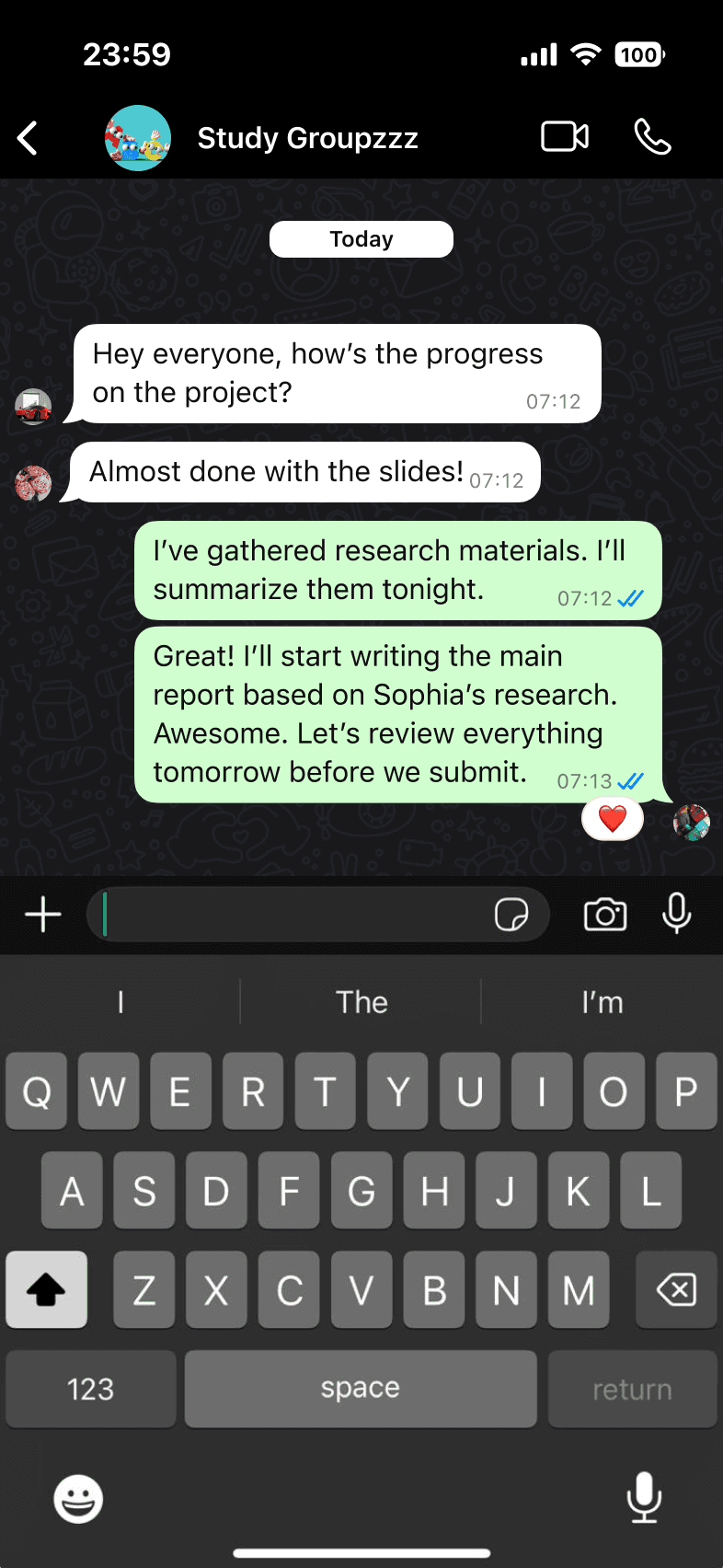
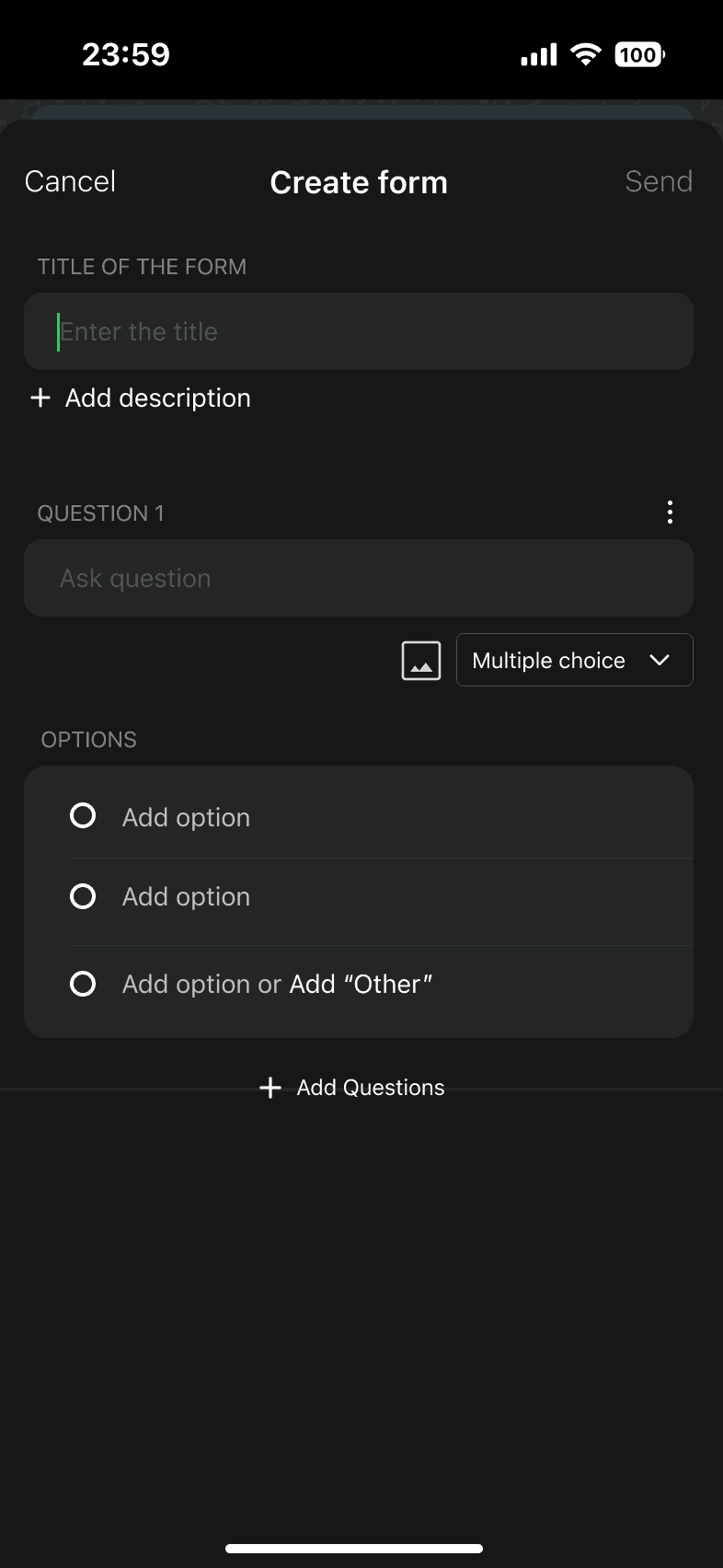
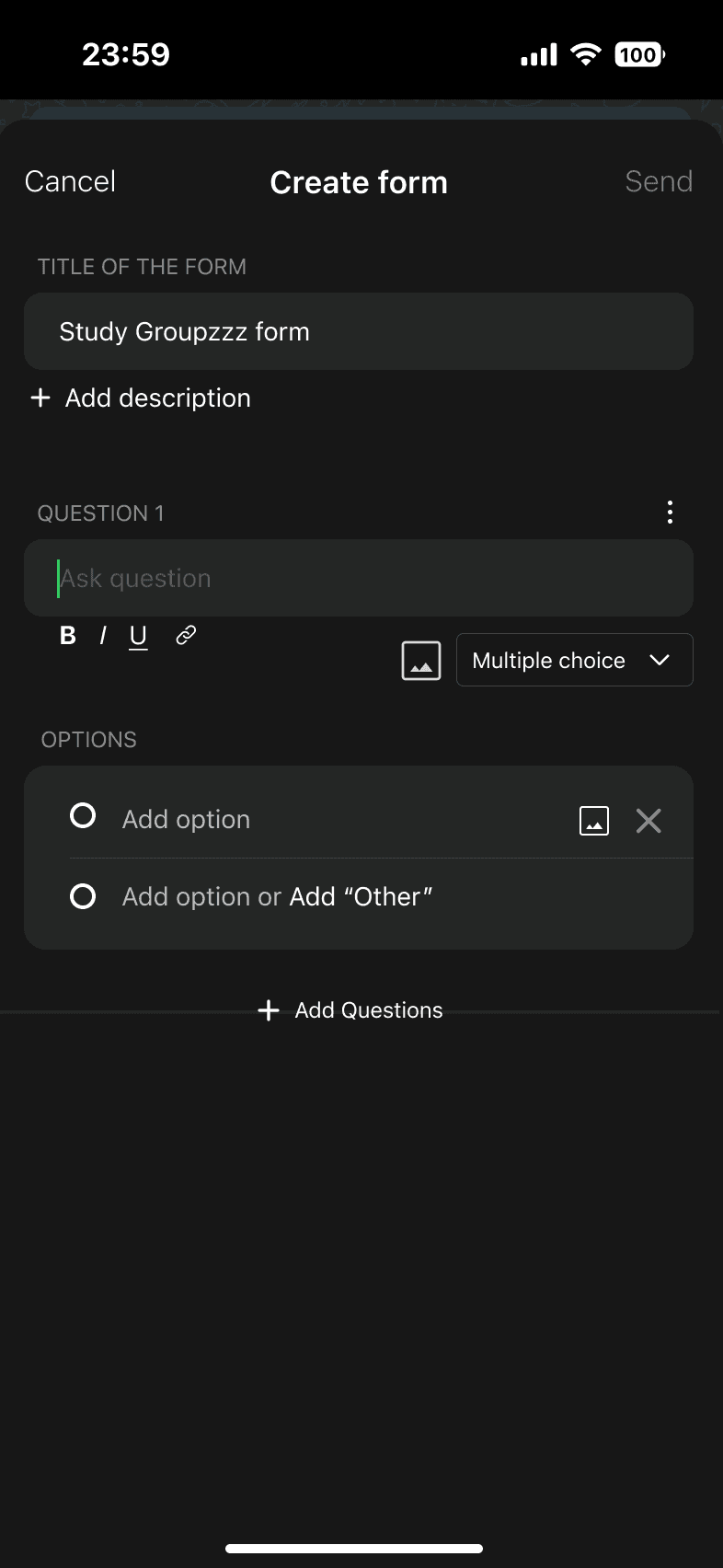
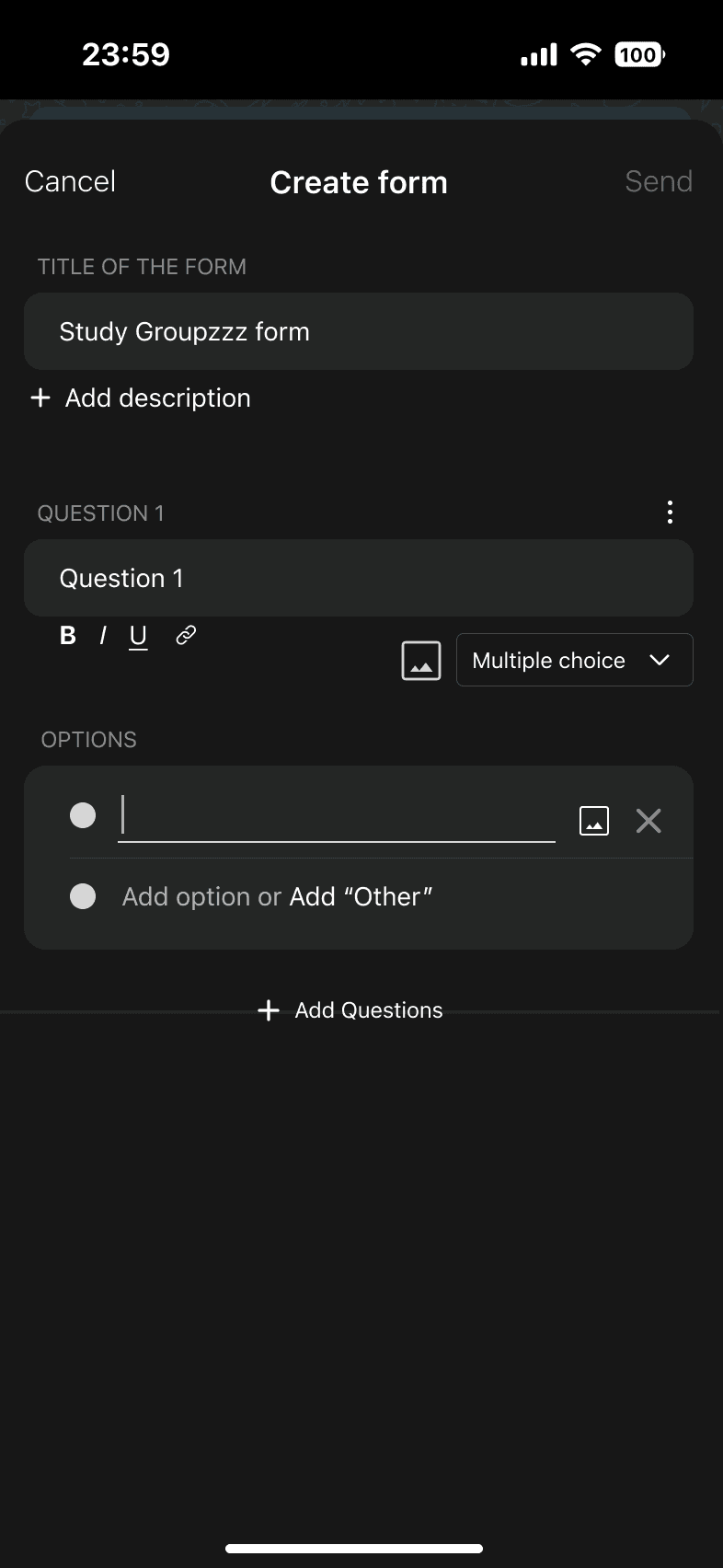
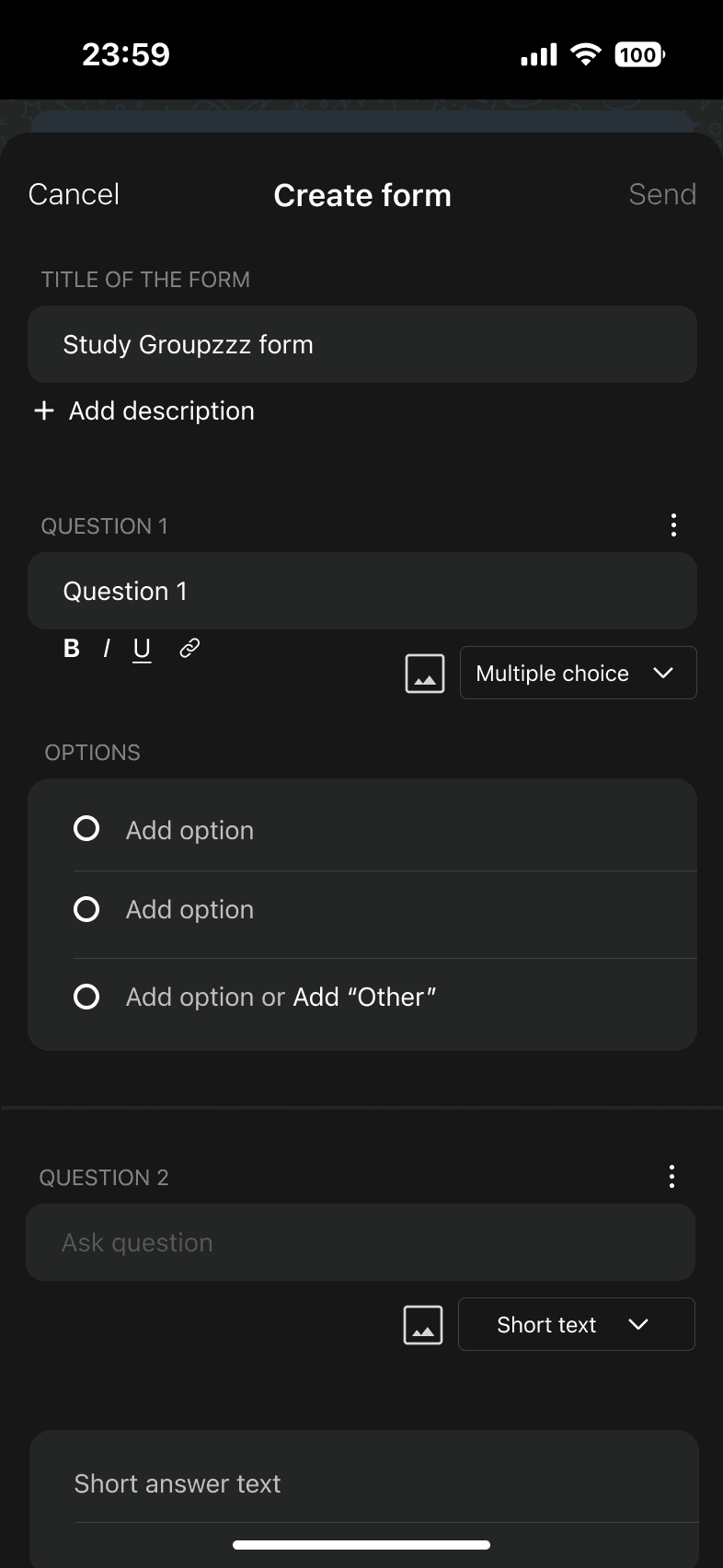
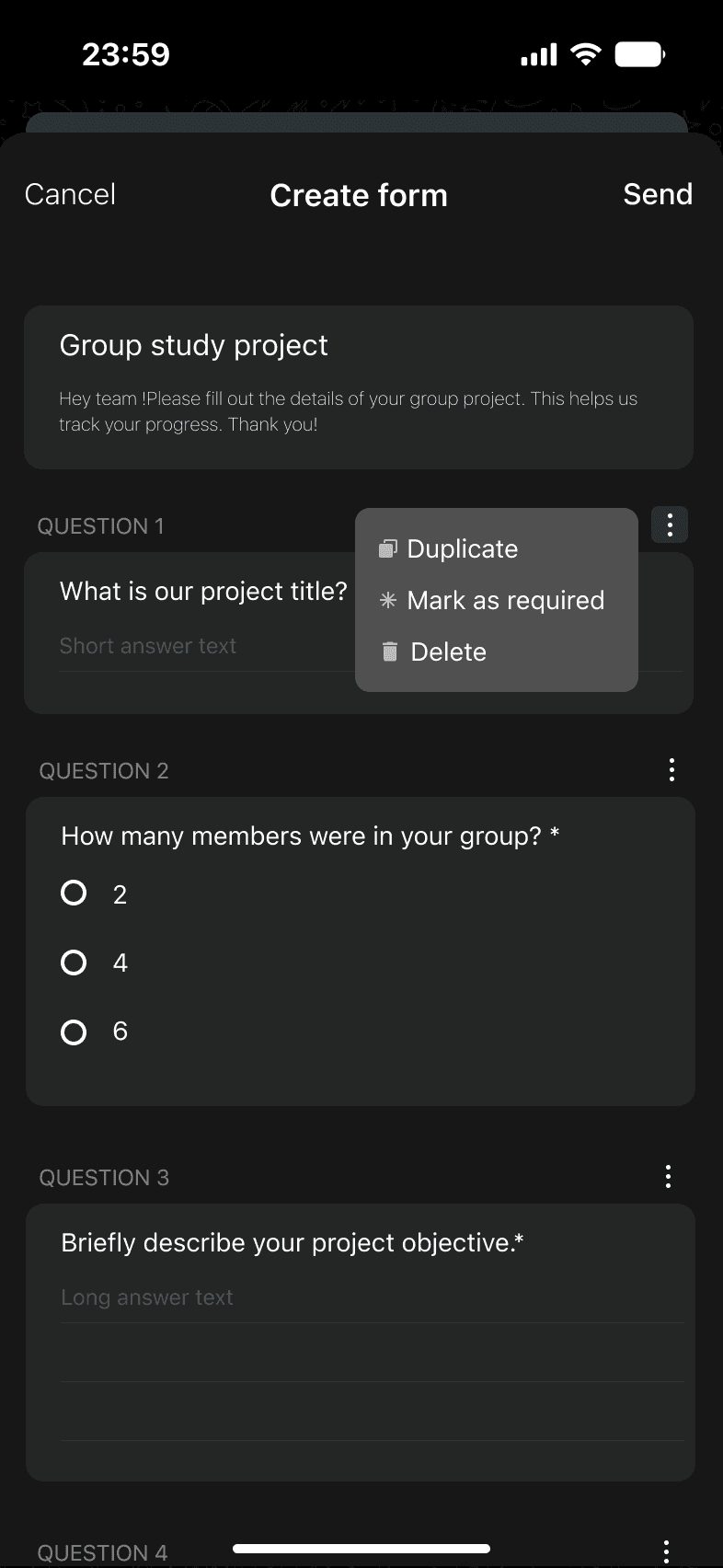
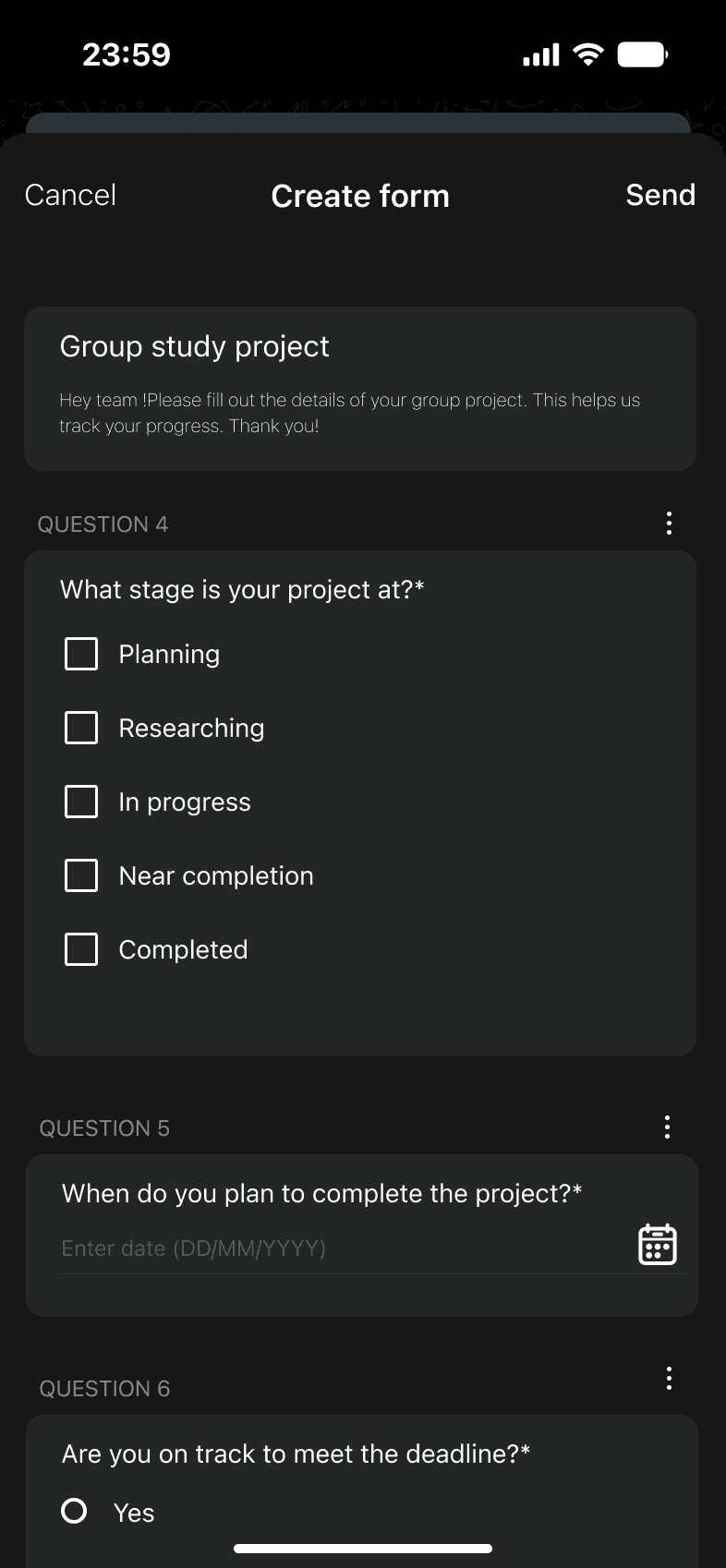
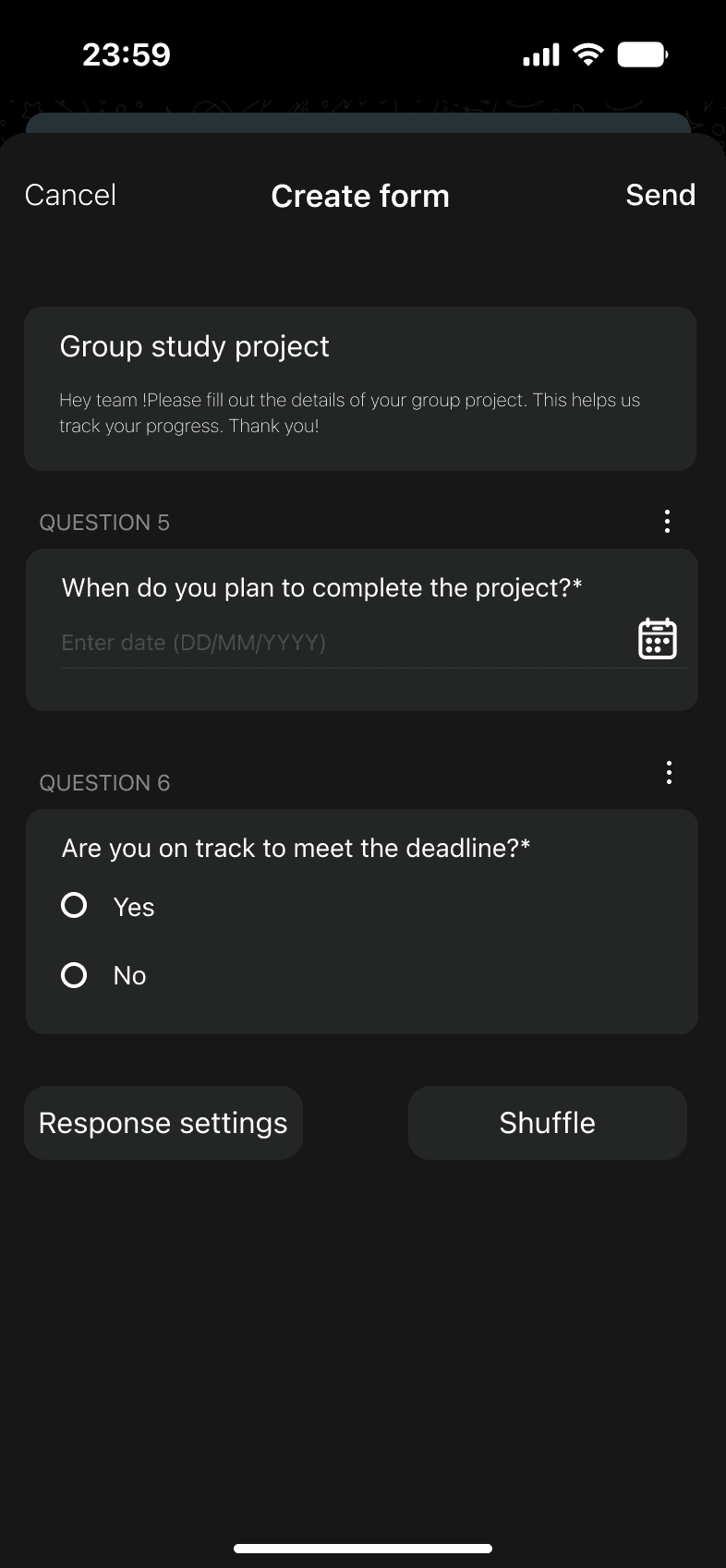
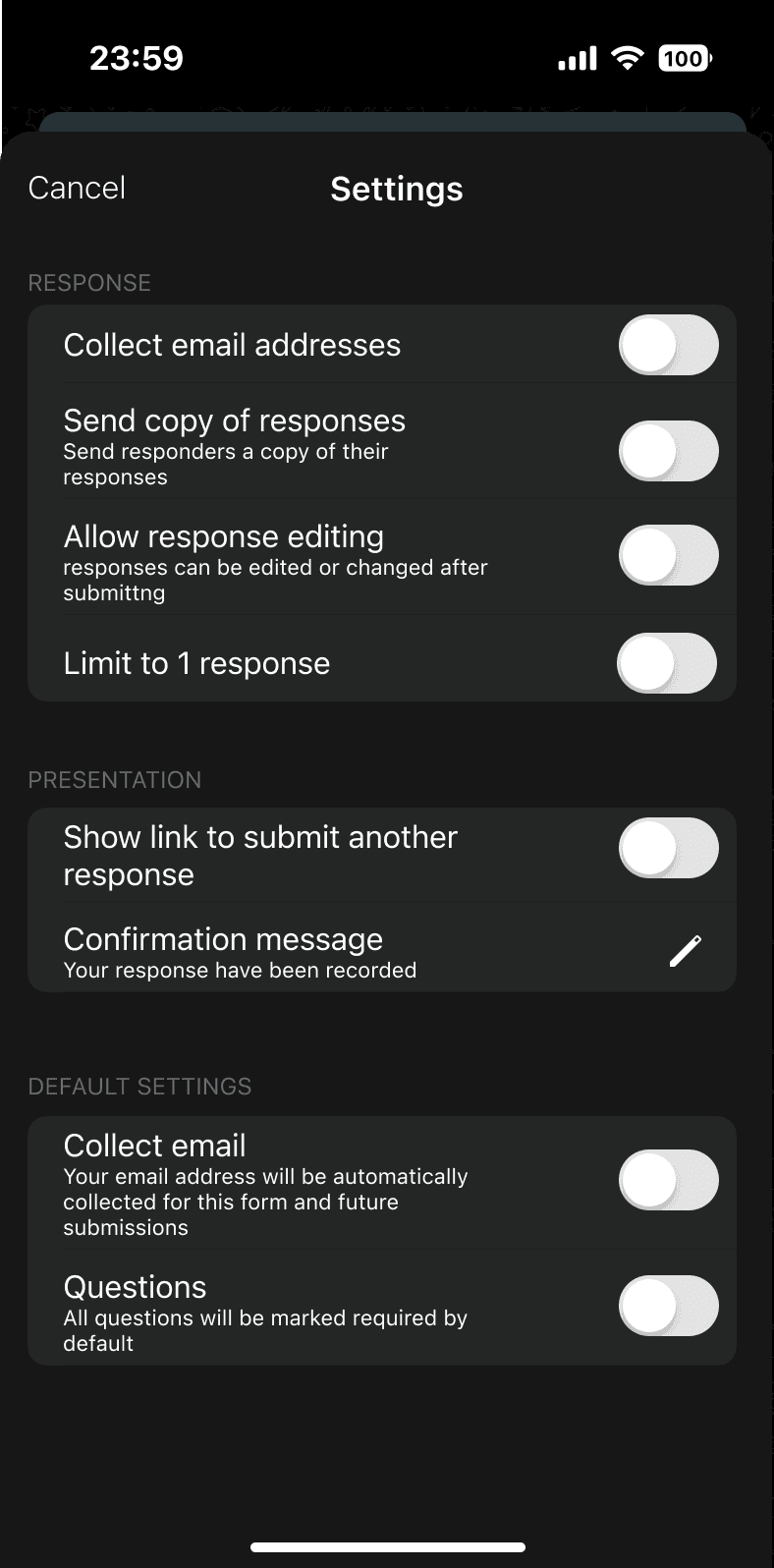
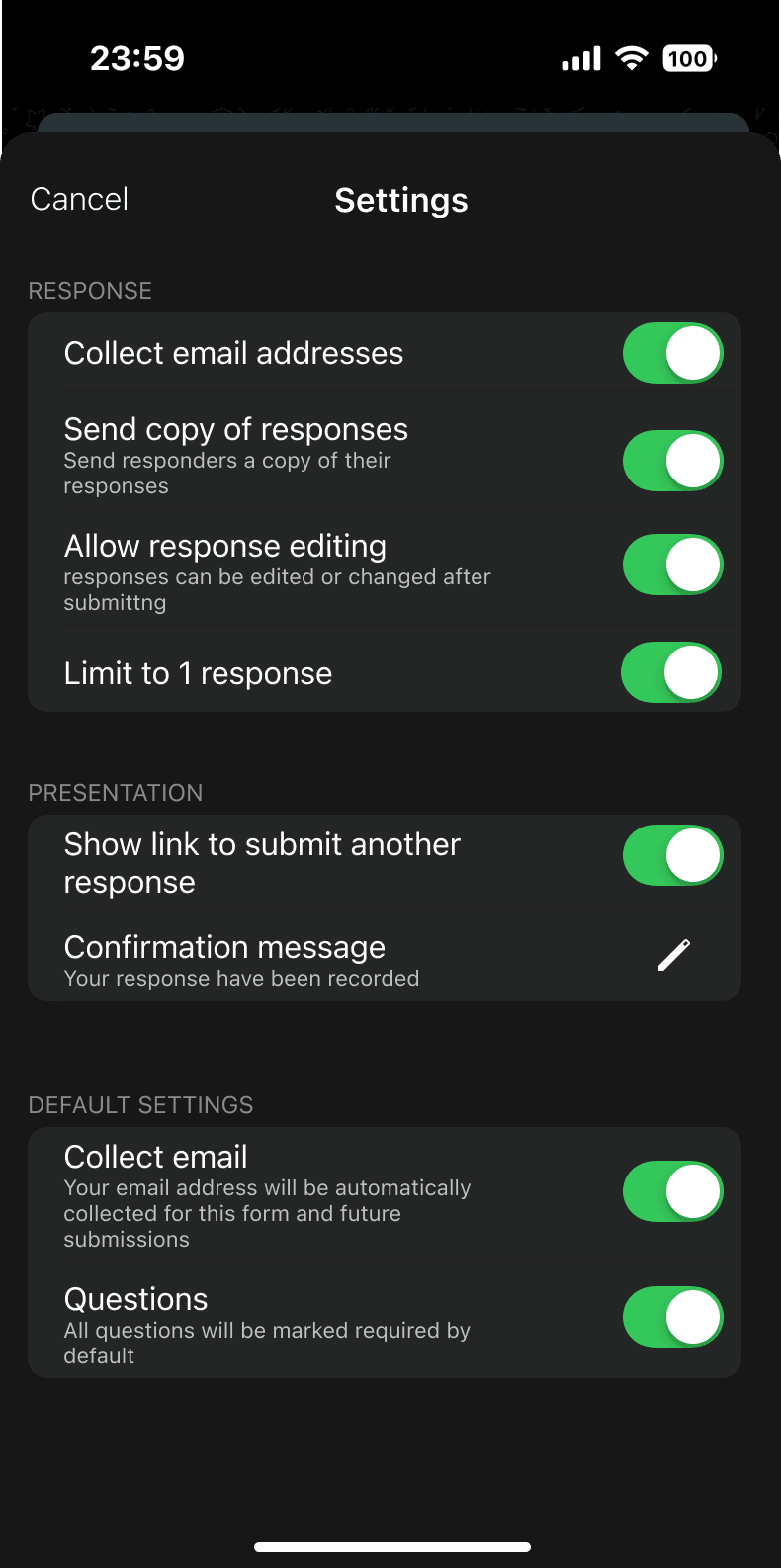
Dark mode - Create form
Work involved
This project was a solo exploration — everything from the early problem framing to the final prototype was done by me.
It was an exercise in understanding behavior, not just building UI.
Closing thoughts
This project reminded me that innovation doesn’t always mean adding something new , sometimes it means removing what’s in the way. The WhatsApp Form concept isn’t about creating a new feature.It’s about preserving flow — letting people make decisions, share inputs, and move forward without breaking context. A small addition, but one with a massive surface area.
Billions of smoother conversations, every single day